

What Makes Supporting an Older Dog With Hip Dysplasia So Hard?
One of the biggest challenges pet parents face is recognizing the early signs of hip dysplasia. The symptoms can be subtle and are easily mistaken for the normal slowing down that comes with age. You might see your dog having a little trouble on the stairs or showing less enthusiasm for playtime and think nothing of it. This delayed recognition is a common and significant hurdle because the earlier you intervene, the more you can do to manage the condition and slow its progression. It's a quiet problem that can grow over years, and the guilt of feeling like you "missed something" can be heavy.
Many owners also misunderstand the root cause of hip dysplasia. It’s not just a disease of old age; it is a developmental condition that is often genetic. It starts when a dog is young, with a hip joint that doesn't form correctly. The ball and socket don't fit snugly, causing instability and friction. Over a lifetime, this "wobble" wears down the cartilage, leading to inflammation and arthritis. Factors like rapid growth as a puppy, carrying extra weight, or high-impact exercise can make the underlying issue much worse. When you don't realize that weight management and proper exercise are critical pieces of the puzzle, you miss out on the most powerful, non-medical ways to help.
For senior dogs, these challenges are magnified. Their bodies don't repair cartilage as efficiently, and years of wear and tear have already taken a toll. They are more sensitive to pain, and their mobility issues can lead to a cycle of inactivity, muscle loss, and further joint strain. It's a frustrating situation where you want to do everything you can, but you're not sure where to start. You just want your dog to feel better, and finding a simple, trustworthy routine that actually works can feel overwhelming.
How Does Hip Dysplasia Actually Affect My Dog's Body?
To truly help your dog, it helps to understand what’s happening inside their hips. Imagine a perfectly smooth ball rotating inside a perfectly fitting cup. That’s a healthy hip joint. The surfaces are covered in slick, rubbery cartilage, and lubricating fluid allows for effortless, pain-free movement. In a dog with hip dysplasia, that perfect fit is gone. The "cup" (socket) is too shallow, so the "ball" (the top of the femur) is loose and unstable. Every time your dog walks, runs, or jumps, the joint wobbles.
Think of it like a car with a misaligned tire. At first, you might not notice anything. But over thousands of miles, the uneven pressure causes the tire tread to wear down prematurely. In your dog's hip, this constant, improper rubbing wears away the protective cartilage. The body tries to stabilize the wobbly joint by creating bone spurs, which leads to osteoarthritis, inflammation, and pain. What started as a simple mechanical issue becomes a chronic, painful condition. This is why a young dog might have hip dysplasia but show no signs, while a senior dog with the same condition is clearly in pain after years of accumulated damage.
Genetics play the biggest role, especially in certain breeds. However, environmental factors can turn a mild genetic predisposition into a severe problem.
| Breed Group | Examples | Key Consideration |
|---|---|---|
| Large & Giant Breeds | German Shepherds, Labrador Retrievers, Golden Retrievers, Great Danes, Saint Bernards | Rapid growth as puppies can put extra stress on developing joints. Controlled nutrition is key. |
| Stocky & Muscular Breeds | Rottweilers, Bulldogs, Mastiffs, Boxers | Their heavy build increases the load on their hips. Maintaining a lean weight is critical. |
| Active & Working Breeds | Bernese Mountain Dogs, Newfoundlands | Bred for endurance, but high-impact activities can accelerate joint wear if dysplasia is present. |
Because this process is gradual, the best approach is a proactive one. According to the American Kennel Club, managing a dog's weight and providing appropriate exercise can significantly improve their comfort. It’s not about curing the condition but about managing it so effectively that your dog can live a full and happy life. This involves reducing inflammation, supporting the remaining cartilage, and maintaining muscle tone to help stabilize the joint.
What Qualities Should I Look For in a Hip and Joint Supplement?
When you're choosing a supplement to add to your dog's daily routine, it's easy to feel overwhelmed by the options. Focusing on a few key qualities can help you cut through the noise and find a product that is safe, effective, and truly beneficial for your dog's joint health.
- Targeted Ingredients for Joint Structure
- Natural Support for Inflammation and Comfort
- A Vet-Formulated and Safety-Tested Formula
- An Easy-to-Give Daily Format
- Clean Ingredients You Can Trust
Targeted Ingredients for Joint Structure
The foundation of any good joint supplement is ingredients that provide the building blocks for healthy cartilage. Look for Glucosamine and Chondroitin. Glucosamine helps the body produce molecules that form cartilage, while Chondroitin helps cartilage retain water, keeping it lubricated and elastic. Another key ingredient is MSM (Methylsulfonylmethane), an organic sulfur compound that supports connective tissues like tendons and ligaments, which are crucial for joint stability.
Natural Support for Inflammation and Comfort
Hip dysplasia leads to chronic inflammation, which is a major source of pain. A great supplement will include ingredients that help manage this inflammation naturally. Hemp seed oil is an excellent source of omega-3 and omega-6 fatty acids in an optimal ratio, which helps support a healthy inflammatory response. Other ingredients like Turmeric (with its active compound, curcumin) are also well-known for their supportive properties, helping to ease stiffness and discomfort associated with daily activity.
A Vet-Formulated and Safety-Tested Formula
This is non-negotiable. Your dog’s health is the top priority. A "vet-formulated" product means that a veterinary professional has reviewed the ingredients and dosages to ensure they are both safe and effective for dogs. It’s a signal of trust and expertise. This ensures the formula is balanced and avoids ingredients that could be harmful. You want confidence that what you're giving your dog every day is designed with their well-being in mind.
An Easy-to-Give Daily Format
The best supplement in the world is useless if you can’t get your dog to take it. Pills can be difficult to hide, and powders can be messy. A soft chew is often the ideal solution, especially for senior dogs who may have dental issues. A tasty, treat-like chew makes daily support feel like a reward, not a chore. It turns a potential struggle into a positive moment in your dog's day, ensuring consistency, which is key to seeing results.
Clean Ingredients You Can Trust
Look at the entire ingredient list, not just the active ones. The formula should be free from unnecessary fillers, artificial colors, and flavors. High-quality, natural ingredients mean you are giving your dog pure support without any extra junk. A simple, clean label is a sign that the company is focused on health, not on cutting corners.
A Simple, Daily Routine for Better Mobility
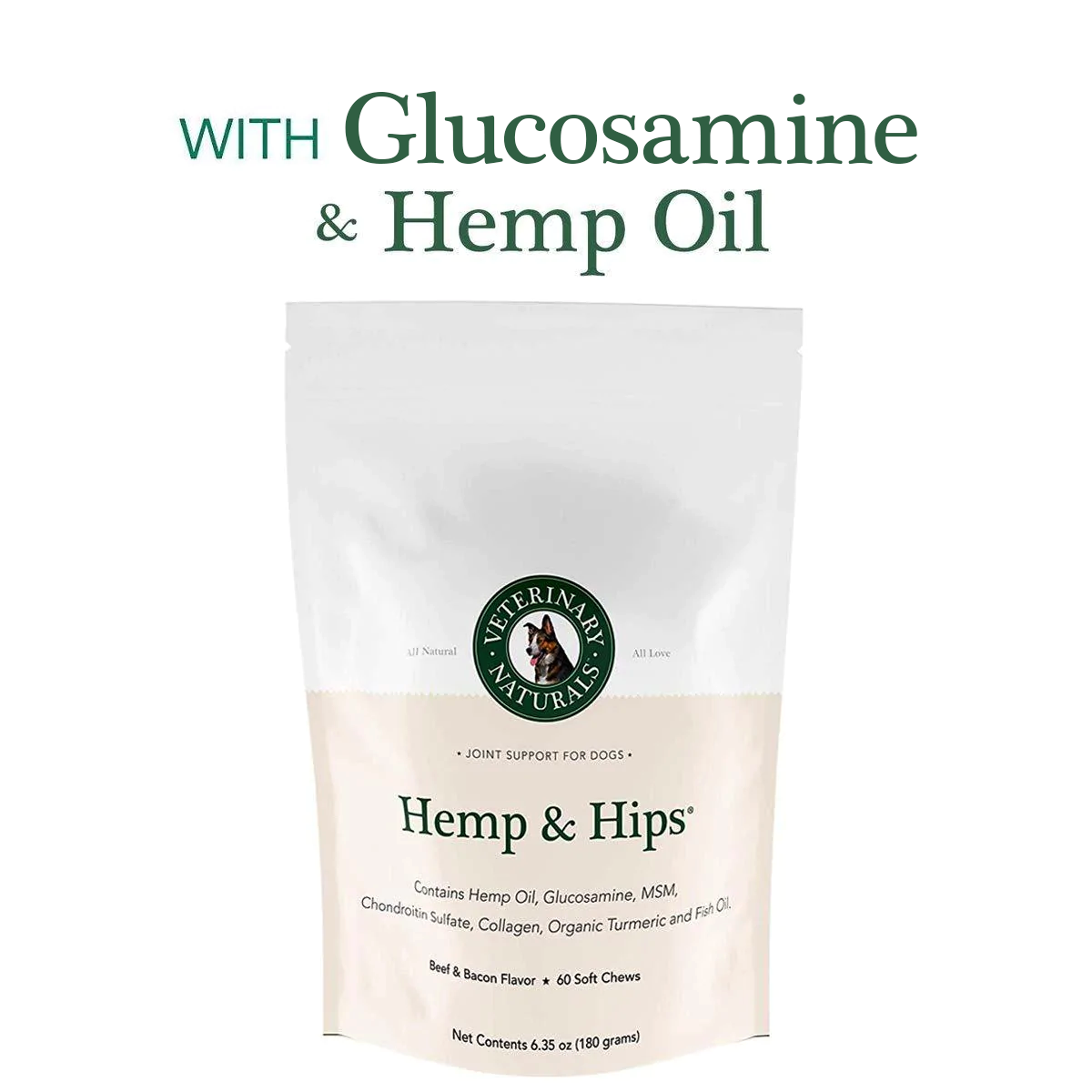
Knowing what to look for is one thing; finding a product that checks all the boxes is another. This is where Vet Naturals comes in. We designed our Hemp & Hips soft chews to be a straightforward, trustworthy part of your dog’s daily care, specifically for pet parents who see their dogs slowing down and just want to help them feel their best again.
Our formula was created by a vet who understands the science behind joint health. We started with the foundational ingredients every strong joint supplement needs: Glucosamine, Chondroitin, and MSM. These are the essentials for supporting cartilage structure and connective tissue. But we didn't stop there. We included Hemp Seed Oil and Powder to provide a balanced source of omegas that help maintain a normal inflammatory response, easing the stiffness that makes getting up so difficult for senior dogs.
We know that for a daily supplement to work, it has to be easy to give. That's why we made our Hemp & Hips in a delicious, soft chew that dogs genuinely love. No more hiding pills in cheese or peanut butter. For your dog, it’s just a tasty treat. For you, it’s peace of mind, knowing you are providing powerful support in the simplest way possible. It fits right into your daily routine, taking just a few seconds to deliver benefits that can make a world of difference in your dog's comfort.
Hearing from other pet parents confirms we’re on the right track. We get messages every day from people who say things like, "Finally, something that works," and, "I've noticed a real difference on our walks." They tell us their older dogs are more willing to play, have an easier time with stairs, and just seem happier overall. This is our entire goal: to provide a simple, vet-informed solution that helps you give your dog more comfortable, joyful days.
Recommended Product: Vet Naturals Hemp & Hips
Support Your Dog’s Comfort and Mobility
Give your dog the daily support they need to move with ease. Our vet-formulated soft chews are designed to maintain joint health, ease stiffness, and support an active lifestyle.
- Vet-Formulated: Combines Glucosamine, Hemp, and MSM for comprehensive joint support.
- Easy to Administer: A tasty soft chew that dogs think is a treat.
- Clean Ingredients: Made in the USA with no artificial colors or flavors.
"We started seeing a difference in a few weeks. Our 10-year-old Lab, Max, is getting up from his bed easier and even wants to play fetch again. It's such a relief to see him more comfortable. Wish we had found these sooner!"
- Sarah P., Verified Buyer
Your Partner in Your Dog’s Health
Learning that your senior dog has hip dysplasia can feel daunting, but it’s not a final diagnosis—it’s the start of a new action plan. You are your dog’s greatest advocate, and by taking proactive steps, you can profoundly improve their daily comfort. Remember, the goal is management, not a magic cure. A comprehensive approach that includes maintaining a healthy weight, providing gentle exercise like swimming or leash walks on flat surfaces, and incorporating a high-quality joint supplement is the most reliable path forward.
Every small change you make adds up. Choosing the right food to keep them lean, swapping a high-impact game of fetch for a calm walk, and adding a daily joint chew to their routine are all powerful ways to show your love. These consistent efforts reduce the strain on their hips, help manage inflammation, and give their body the support it needs to feel its best.
You don't have to navigate this alone. Armed with the right information and supportive tools, you can feel confident in the care you provide. Seeing your dog move with more ease, greet you with more enthusiasm, and rest more comfortably is the greatest reward. You’ve got this, and you’re already on the right path just by being here and learning how to help.
Check out our other blog for more information. A Vet’s Guide to Helping Dogs with Arthritis and Joint Pain